
Checking for a Warrant in Grand Junction
Match the Grand Junction warrant search to where the case started. A municipal citation or ordinance case shows up in the city's online court portal. That tool is not a complete warrant index, though. The citation itself names the court, so use it when you have it. When an online answer is missing or unclear, contact the Municipal Court clerk and confirm status directly before acting. Police records and Mesa County records run on separate channels entirely.
- Read the citation, notice, or case paper to identify the issuing court.
- Search the Grand Junction court portal for the municipal case or citation.
- Confirm warrant status and the required next step with the Municipal Court clerk.
- Request Grand Junction Police records from its Records and Data Management Unit when the record is held by police.
- Use the Mesa County Combined Court or MCSO Records Unit for state-court or sheriff records.
Call the Municipal Court at 970-244-1537 option 3, or write to courts@gjcity.org. Keep sensitive identity numbers out of an open message. The office will point you to a secure method if one is needed.
Grand Junction Warrant Portal Fields
The official Grand Junction court search lets you locate a citation or court entry several ways. Search by citation number. Driver-license details, Social Security number, and vehicle details all work too. So does a person's name or a business name. Some modes add date of birth or state to separate similar records. The portal opens citation and case access, not a promise that every Grand Junction warrant appears there.
| Mode | Fields | Best use |
|---|---|---|
| Citation | Citation number and birth date | A known ticket |
| Name | First, last, and birth date | A municipal case lead |
| License | Number, state, and birth date | A citation tied to a license |
| Vehicle | Plate or vehicle details | A parking or vehicle matter |
Grand Junction's portal opens on a blank citation-number screen, with no person's record displayed.
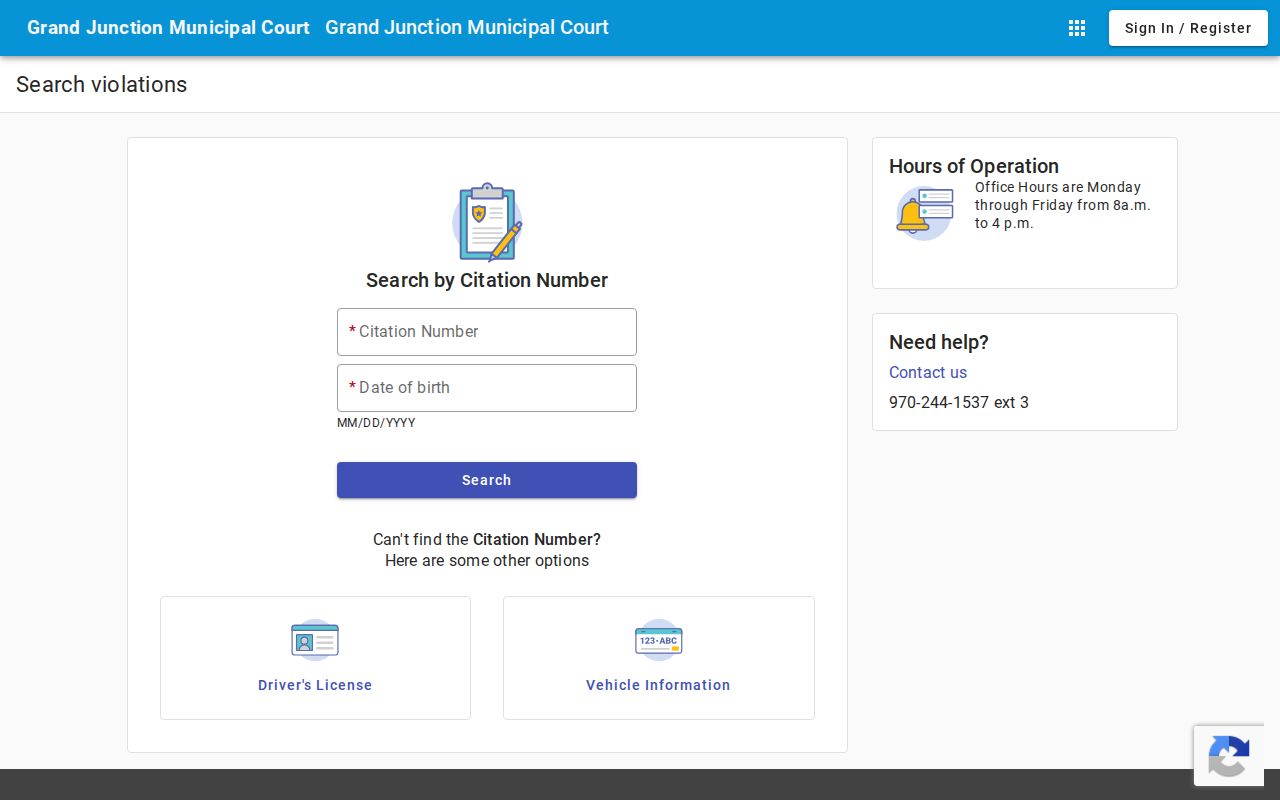
That screen supports careful case lookup. For a current Grand Junction warrant answer, the court clerk still has the final word.
Grand Junction Police and Municipal Court
Grand Junction Municipal Court hears city ordinance misdemeanors and civil infractions inside city limits and on city property. It issues its own process. Grand Junction police verify and execute municipal warrants under city procedure. None of that mixes with the Mesa County Combined Court, which keeps the county and district court case files. The Sheriff's Office holds MCSO agency records.
Municipal Court
250 N 5th Street, Grand Junction, CO 81501
970-244-1537 option 3
courts@gjcity.org
Police Records
555 Ute Street, Grand Junction, CO
970-549-5000
pdrecords@gjcity.org
The official court page shows its address, service hours, forms, and warrant guidance.
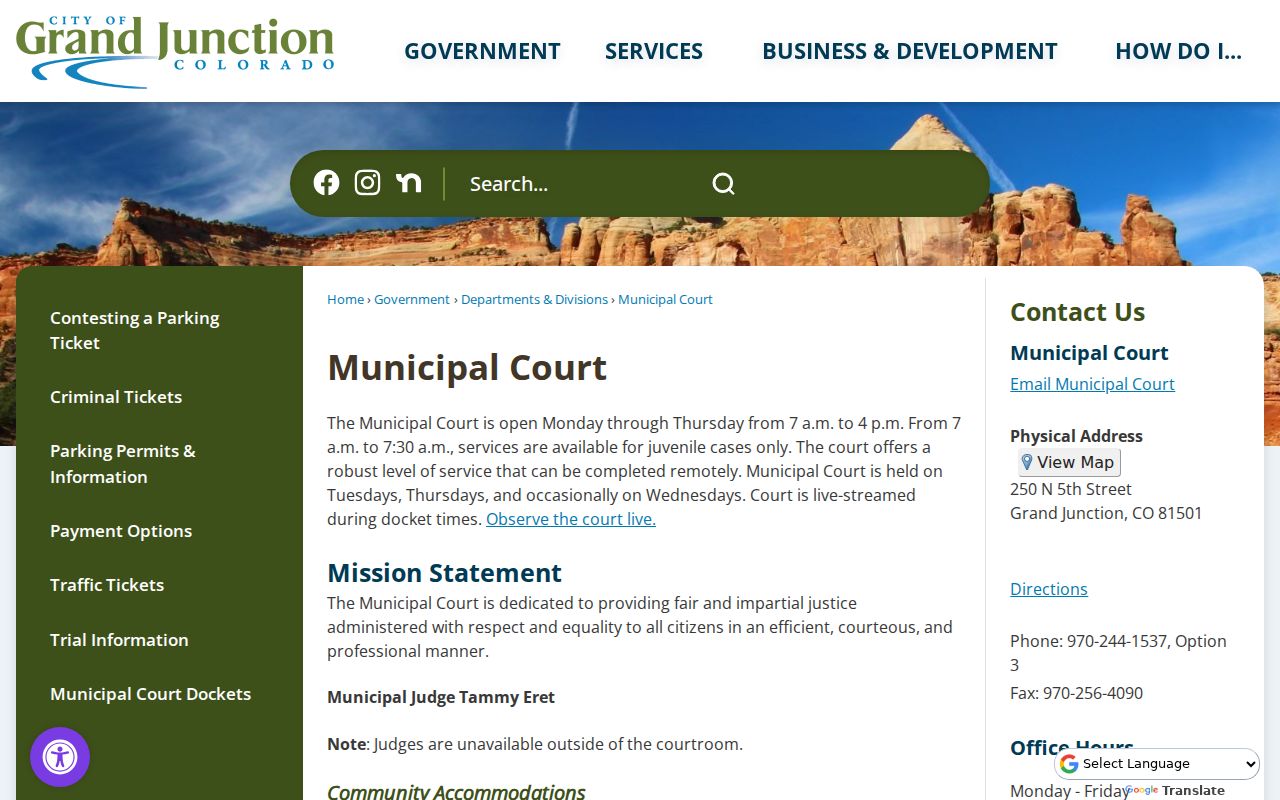
The two counters do different jobs. A case-status question goes to the court; an agency-report request goes to the police records desk.
Grand Junction OJW Warrant Meaning
Grand Junction's municipal code calls its traffic-infraction tool an outstanding judgment warrant, or OJW. The label fits when a person fails to plead, skips a court date, or ignores a court order. It is a local term. Nothing about it is statewide. Unpaid tickets do not all follow the same path either.
OJW: Grand Junction's municipal-code term for a traffic-infraction judgment warrant.
FTA: Failure to appear for a required setting, which may lead to court action.
Bench warrant: A court order often tied to a missed appearance or noncompliance.
Ask the Municipal Court whether the record is an OJW, another municipal warrant, or just an unresolved citation. That distinction controls the fix. It decides whether payment, a court date, a bond, or another judicial step applies.
Grand Junction Warrant Types
Grand Junction residents can face several kinds of orders, and the issuing authority controls the record. City ordinance and traffic matters begin in Municipal Court. County misdemeanors and state traffic matters land in County Court. Felony proceedings belong in District Court. An arrest warrant tied to a police investigation may sit with a court outside the municipal system, so confirm it there.
| Warrant type | How it may arise | Confirm with |
|---|---|---|
| OJW | Failure to plead, appear, or comply in a city traffic case | Grand Junction Municipal Court |
| Municipal bench warrant | Missed city setting or noncompliance | Grand Junction Municipal Court |
| Arrest warrant | Judicial order tied to an alleged offense | The named issuing court |
| County or district warrant | State criminal or county-court proceeding | Mesa County Combined Court |
Grand Junction Warrant Resolution Routes
Grand Junction publishes both a clearing guide and an arrest-warrant directive. Three broad options appear in the guide. Work through an attorney. Return to the city with a local bail bondsman. Or appear in person and post the full bond at the municipal clerk window, which gets you a return date. Court staff can explain procedure, but the guide says clerks cannot recommend an attorney or bondsman.
Confirm before paying. Ask whether the warrant is current, whether full bond is required, where payment is accepted, and when the next appearance will occur.
The directive carries older bond-processing times, and current city pages state different office hours. Call ahead before you travel. Keep the payment receipt. Keep the written return date too. A payment alone does not recall every Grand Junction warrant without court action.
Inside a Grand Junction Warrant Record
Read a matched record as identifiers and court instructions, not just a name. The citation or case number is the key. Give it to the clerk when you call. The issuing court explains which office controls the file. Status and bond details can shift, so the clerk's latest answer beats an old screen or copy.
| Case or citation number | The local file key, such as GJMC-2026-#####, used here only as an illustrative format. |
|---|---|
| Subject name | The name associated with the court file, checked with another identifier. |
| Alleged offense | The city code, traffic, or other charge description. |
| Issuing court | The municipal, county, or district court that controls the order. |
| Bond or amount | A figure that must be confirmed before payment. |
| Status | Whether the order is active, recalled, served, or otherwise changed. |
Grand Junction Warrant Custodians Compared
Two counters downtown answer different questions. The Mesa County Justice Center at 125 N Spruce Street holds state district and county court files. The Sheriff's Office Records Unit at 215 Rice Street keeps MCSO reports, arrests, and the agency's own active-warrant-check response. Neither replaces Grand Junction Municipal Court for a city case. The Colorado Judicial docket search lays out the state-court filters: district, county, courthouse, court type, division, date, case number, and party.
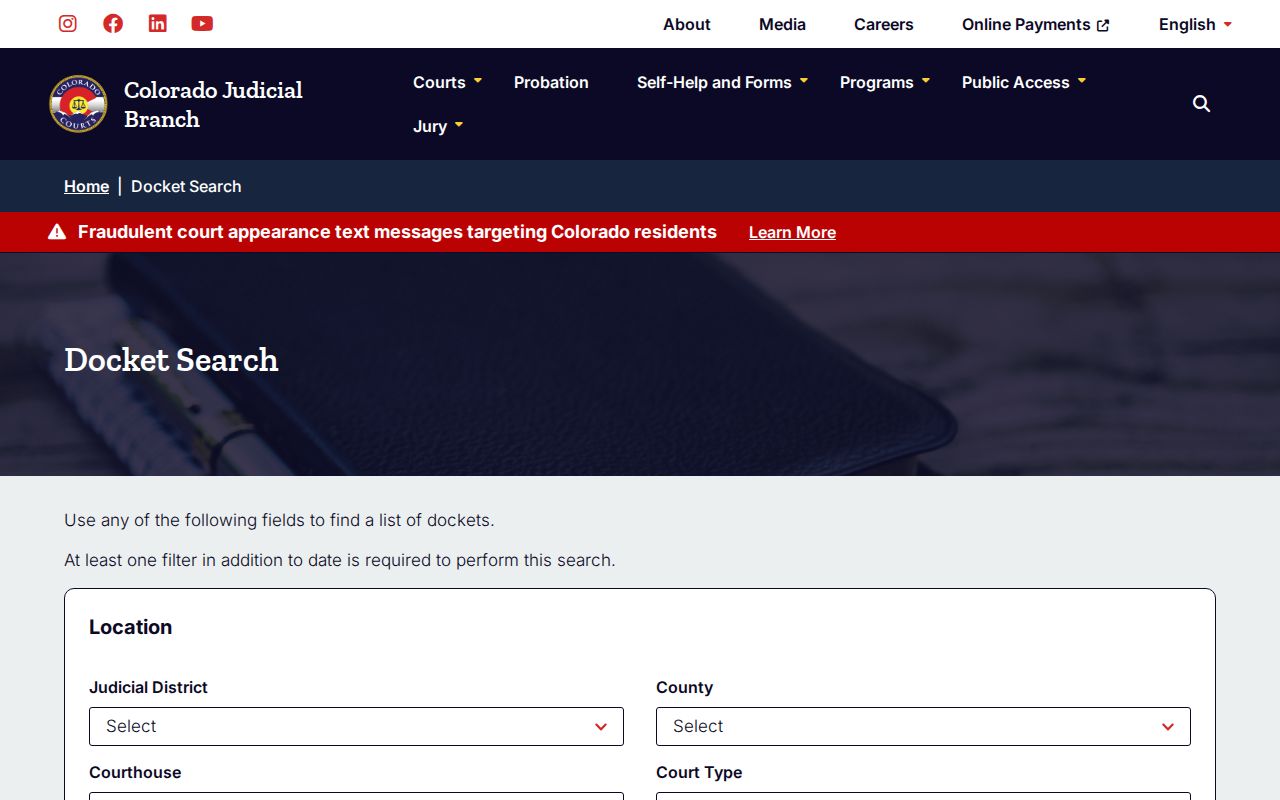
Those filters can point toward a state case. Still, a docket entry is not a complete, real-time warrant certification for Grand Junction.
How Grand Junction Warrants Fit Mesa County
A Grand Junction ticket lands in municipal court, and any warrant it produces stays the city's business. City police serve those orders. The city's own directive splits the work by type: county, district, and GJPD warrants are confirmed through Communications, and anyone requiring custody goes to Mesa County Detention. MCSO Records offers a separate active-warrant check on its signed form. That is one lane among several. For the fuller court, sheriff, and state split, the Mesa County warrant records overview pulls it together.
Warrant flow: Grand Junction Municipal Court / Police › Mesa County Sheriff › court and law-enforcement systems
Colorado publishes no single statewide warrant-search portal. A clean result in one city, county, or state docket channel, Grand Junction included, therefore cannot clear every possible record.
Grand Junction Warrant Data Limits
Grand Junction's portal and Colorado's docket tools are leads. They do not guarantee real-time warrant status, and the judiciary itself warns that online data may lag while vendor searches may not match the official file. A blank screen proves little. Call the court named on the citation or notice. The Colorado Judicial access guide spells out those timing and access limits.
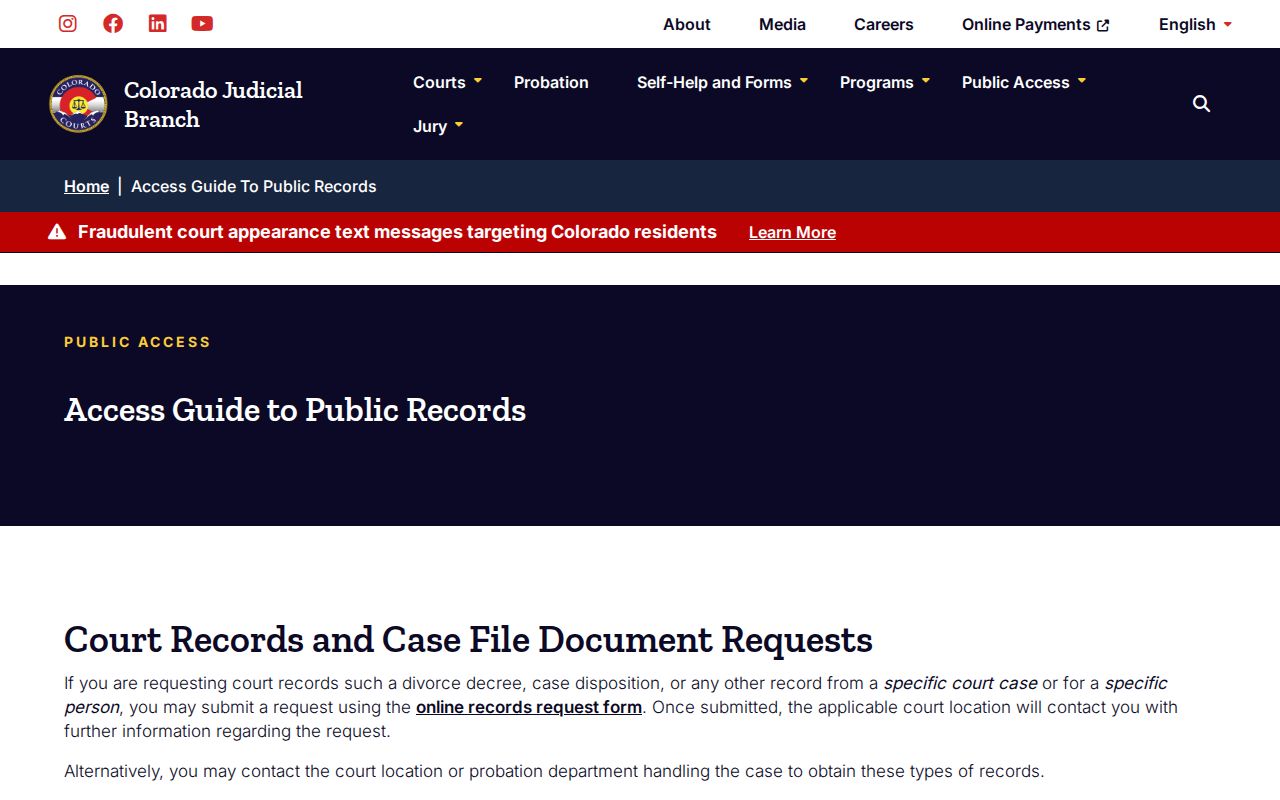
The lag matters most once money moves. In Grand Junction, the real question is often whether an order stayed active after a payment, appearance, recall request, or arrest.
Grand Junction Warrant Records and Public Access
Who holds the file decides access. In Grand Junction, municipal case files sit with the city court. Police reports belong to the city's Records and Data Management Unit. MCSO criminal-justice records stay with the Sheriff's Records Unit. District and county case files go to the Colorado Judicial Branch, though open investigations, sealed material, juvenile files, protected identity data, and unexecuted warrant material may be limited or withheld.
Key rules:
Colorado Open Records Act and Colorado Criminal Justice Records Act set custodian-based access rules and allow lawful limits for protected records.
C.R.S. 16-1-106 addresses written, sworn or affirmed warrant applications.
C.R.S. 19-1-304 imposes special rules for juvenile records.
Grand Junction Police Warrant Records
Grand Junction's police Records and Data Management Unit takes criminal-justice-record requests its own way. Visit the counter at 555 Ute Street. Weekday hours run 7 a.m. to 5 p.m. Questions go to 970-549-5000, pdrecords@gjcity.org, or fax 970-549-5002. Ask for the police record, not the court file. That separation protects accuracy. An officer's report, an arrest entry, a municipal warrant, and a district-court docket event can all concern the same matter yet remain four distinct records. Name the event, date, agency, and case number. The request gets cleaner. It also keeps a police-record response from being read as proof of current court status. Grand Junction counted 65,560 residents in the 2020 Census, making it Mesa County's largest city. Size explains the counters. Grand Junction anchors Mesa County's justice services, so several offices answer to separate custodians. Proximity never merges their files. Someone at the Grand Junction police records counter may still need the municipal clerk about a warrant order, and a state charge can require the Justice Center. So write things down. Note which office answered, the date of the check, and any next court setting, and Grand Junction records from separate custodians stay untangled.